Being understood and acknowledged is part of being cared for.
For many whānau, walking into a general practice or another health care setting can feel unfamiliar. Hearing your own reo, your own language, can be the thing that shifts how welcome you feel. And when people feel at ease, they are more likely to come back, to ask questions, and to share what is really going on for them.
The little things matter
▲ Saying someone’s ingoa (name) correctly
▲ Using the kupu (words) you already know
▲ Greeting people in te reo
▲ Being willing to learn and to correct yourself along the way
Learning alongside each other
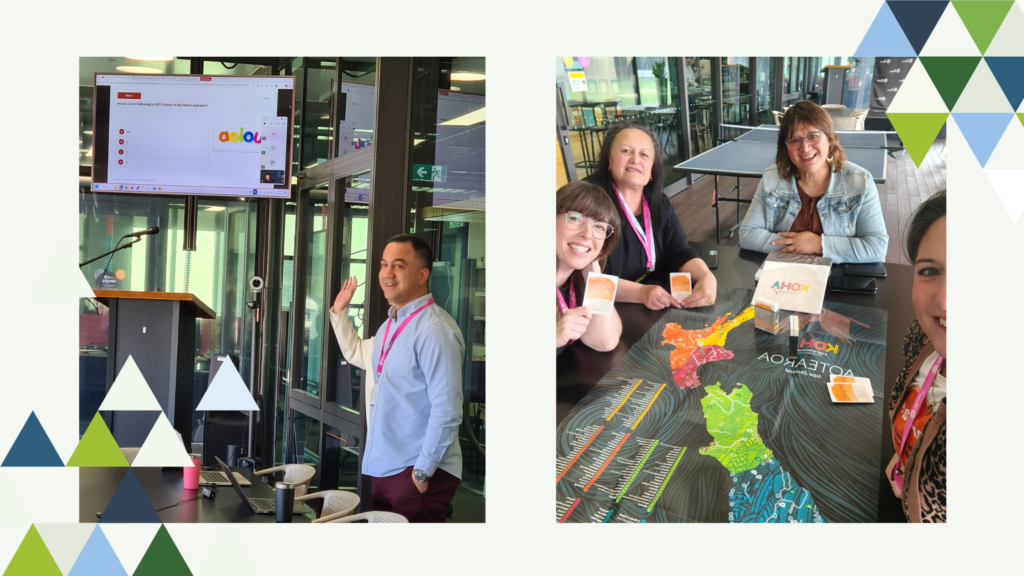
This week WBOPPHO’s kaimahi marked Te Wiki o te Reo Māori together at our shared whare, alongside The Kollective and Socialink Tūhono Pāpori teams. We joined quizzes, waiata, games and learning sessions, with different groups each taking a turn to lead. There was a singalong of old favourites like Tauranga Moana and Pōkarekare Ana, a card game about Aotearoa’s landmarks and Māori culture, and even coffee ordered in te reo at the local café.
Growing our reo is not the job of one person or group. This year’s Te Wiki o te Reo Māori theme says it well: Ake, Ake, Ake – A Forever Language. Te reo Māori belongs in our kāinga (homes), our kura (schools), our hapori (communities) and in our health system, not just for one week of the year. Any day is the right day to give it a go.
“Ahakoa he iti, he pounamu. Although it is small, it is precious.” Whether it is one new word or a whole waiata, every attempt helps to keep our language alive and thriving.